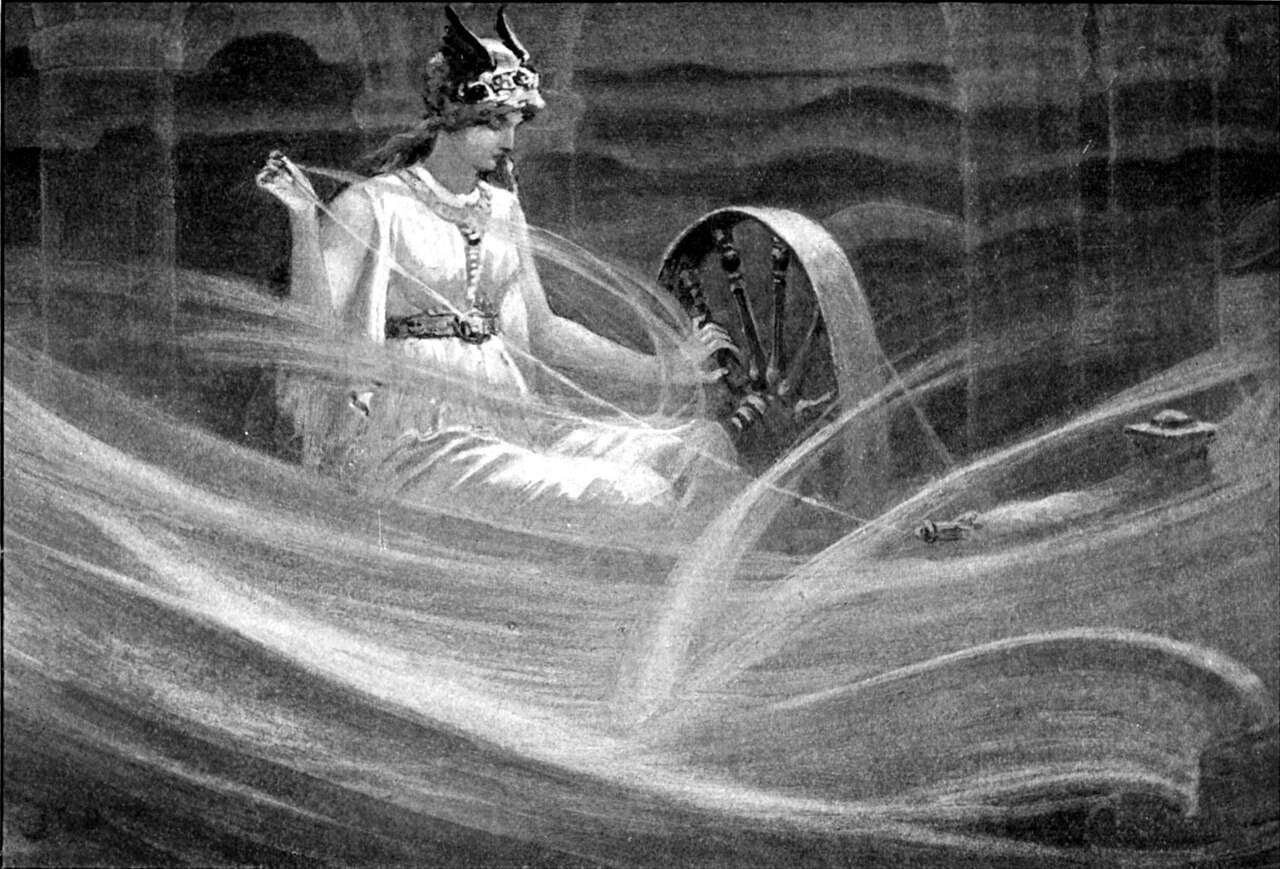
Wife of Odin, foremost of the Ásynjur, mother of Baldr. Knows what fate brings but does not speak it.
Frigg (Old Norse Frigg) is Odin's wife and sovereign of Asgard. She is foremost among the goddesses and is described in Lokasenna 26 as the one who truly knows Odin's mind and the fates. Despite this, she is characterized by silence about the future: she knows what fate holds but does not reveal it, a trait implied in Völuspá and explicitly stated in Gylfaginning 35.
Frigg is the mother of Baldr, the most beautiful and pure of the Aesir. Her deepest mythological role revolves around the attempt to protect her son: she traveled to all things and beings in the world and secured oaths not to harm Baldr, but overlooked the mistletoe as too insignificant (Gylfaginning 49). It is this oversight that Loki exploits to bring about Baldr's death.
In Völuspá 33 and Baldrs draumar Frigg is depicted as sorrowful and bereft when Baldr's dreams portend his imminent death. Lokasenna 26-27 contains Loki's accusation that Frigg shared her bed with Odin's brothers Vili and Ve during Odin's absence, an accusation paralleled in Ynglinga saga. Whether these references reflect old mythic tradition or belong to the Eddic flyting genre is debated.
Frigg dwells in the hall Fensalir ('fen halls') and is associated with spinning and weaving, attributes shared with fate-weaving women in Norse tradition. Her name, cognate with Sanskrit priyā ('beloved'), underscores her original grounding in the common Indo-European divine world. Her relationship to the Vanir goddess Freyja is one of the enduring questions of Norse religious studies.
Sources in the Eddas
- Völuspá 33
- The seeress depicts Frigg's grief as Baldr's fall approaches; 'Frigg wept in Fensalir'.
- Lokasenna 26-29
- Loki accuses Frigg of infidelity to Odin; Frigg defends herself and invokes the loss of Baldr.
- Baldrs draumar 1-14
- Frigg's grief and Baldr's dreams form the core of this short Eddic poem; Odin rides to Hel to consult a seeress.
Interpretive traditions
A What we know
Frigg is Odin's wife and foremost of the goddesses, attested in Lokasenna, Völuspá, and Gylfaginning.
She knows the future but does not speak of it, a consistent trait throughout the sources.
She is Baldr's mother and vainly attempted to protect him from all harm.
B What we think we know
Whether Frigg and Freyja were originally the same goddess, or are distinctly separate figures with superficial resemblance, is one of the most debated questions in Norse religious history (Näsström, Dronke).
The accusation of infidelity in Lokasenna may reflect ancient mythic tradition or may simply be a flyting topos without historical substance.
C What we do not know
Frigg's own cult, if one existed, is difficult to document archaeologically or toponymically.
It is unknown why the mistletoe specifically was overlooked in Frigg's oath-seeking; the sources provide no consistent explanation.